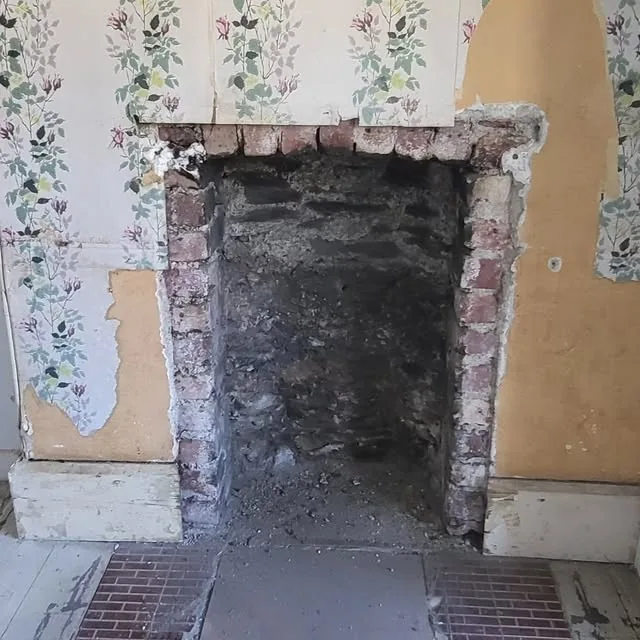
Start with what the building is telling you
Where is the damp visible? Does it change after rain, or at a particular time of year? Is it near a window, chimney or ground level? Those details are more useful than assuming every damp patch has the same cause.
Historic England’s guidance for traditional buildings emphasises investigation before treatment. I take that practical approach to the initial conversation: understanding the building and its existing materials before deciding what work makes sense.
Looking at solid walls and previous repairs
Older solid-wall homes can have several layers of previous repairs. The finish you can see may be different from the original material beneath it. A useful starting point is to look at both sides of the wall, where accessible, and consider changes made over time.
Depending on what is found, the conversation may include wall finishes, lime repairs, mortar joints or other maintenance concerns. The work should follow the cause of the problem. A photograph alone is not enough to confirm a diagnosis.
What to send before we speak
- A wider photograph showing where the patch sits in the room
- A close-up of staining, damaged plaster or the wall surface
- An outside view of the same wall, if accessible
- When you first noticed it and whether it changes with the weather
- Your town or village and anything you know about earlier repairs
A clear next step
I am Stu, based in Looe. We can start with your observations, discuss whether a visit is needed and consider repair options. If lime plaster, render or pointing is part of the work, you can read more on the related service pages below.
Further reading: Historic England: investigating moisture in traditional buildings. This is independent guidance, not an accreditation or endorsement of this business.